
Letter to Erasmus+ – Travel Report from the Study Period in Stockholm
The Free Art School began its internationalization activities as an accredited Erasmus+ institution last summer. In May 2026, a mobility period in Stockholm was carried out for second-year students.
This report was written by Malin Fagerström, a second-year student at the Free Art School.
Helsinki, 25 May 2026
Dear Erasmus+,
Stockholm was fantastic!
In just under three days, we were able to experience a rich cultural offering thanks to you. We could never have dreamed that this study trip would provide such a wonderful and comprehensive experience.
The Free Art School’s Vice Principal, Hannaleena Heiska, and Study Secretary, Ilse Rossander, had already planned the excellent program when Helsinki was still covered in snow. The interesting and diverse schedule included a study visit to the Royal Institute of Art, as well as visits to Moderna Museet, Liljevalchs, Prince Eugen’s Waldemarsudde, and Galleri Duerr. Later in the spring, the final touches were added to the program by painting teacher Tuomo Laakso and Study Secretary Ilse Rossander, both of whom also participated in the trip.
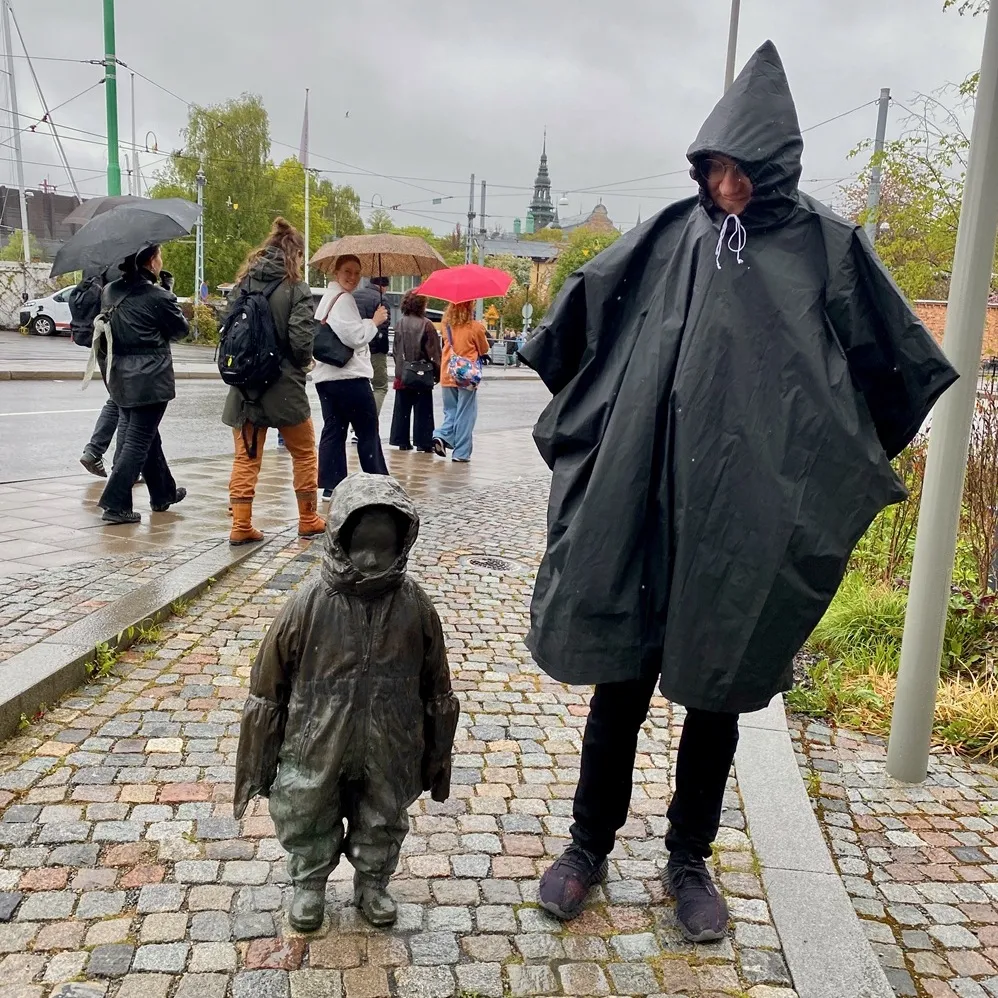
Stockholm, dressed in its spring colors, showed itself from its very best side. The light drizzle between destinations did not bother us at all. On the contrary, we felt that it made all the colors appear even clearer. As artists, we can never help viewing the world through an artist's eye, wherever we are.
Dear Erasmus+, we remember your wish that we students should be inspired, broaden our horizons, and gain practical experience of internationality and European cooperation.
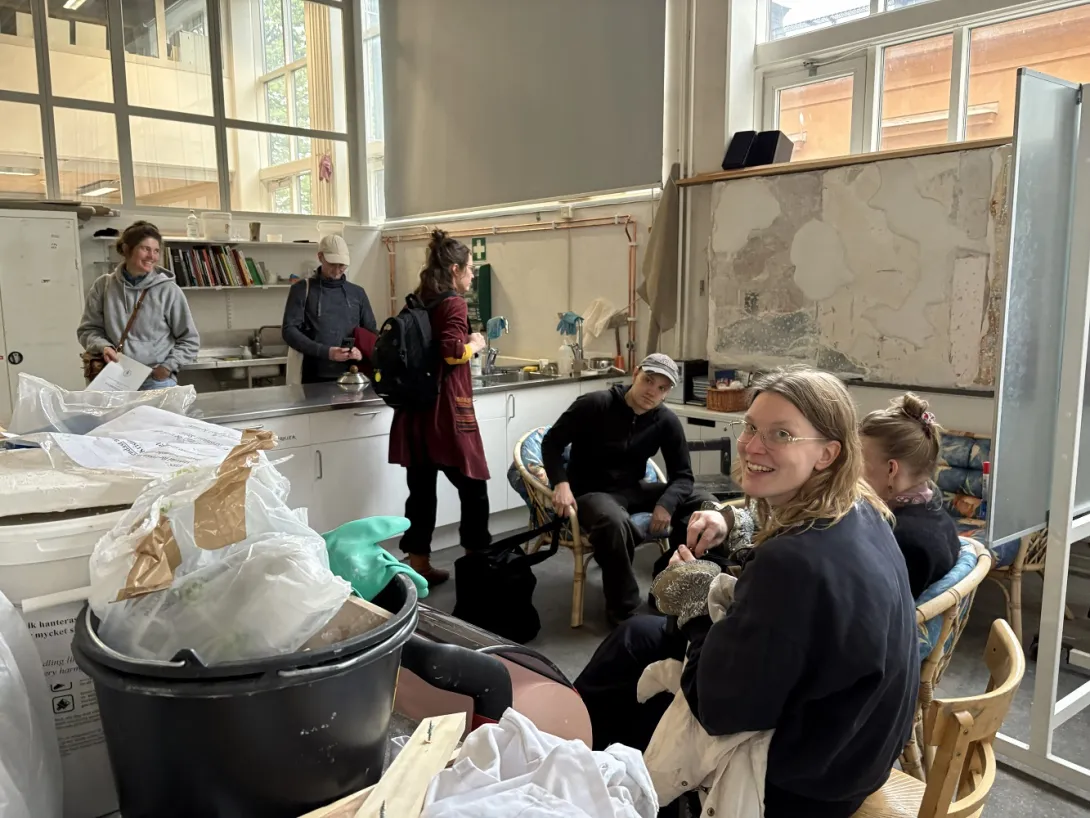
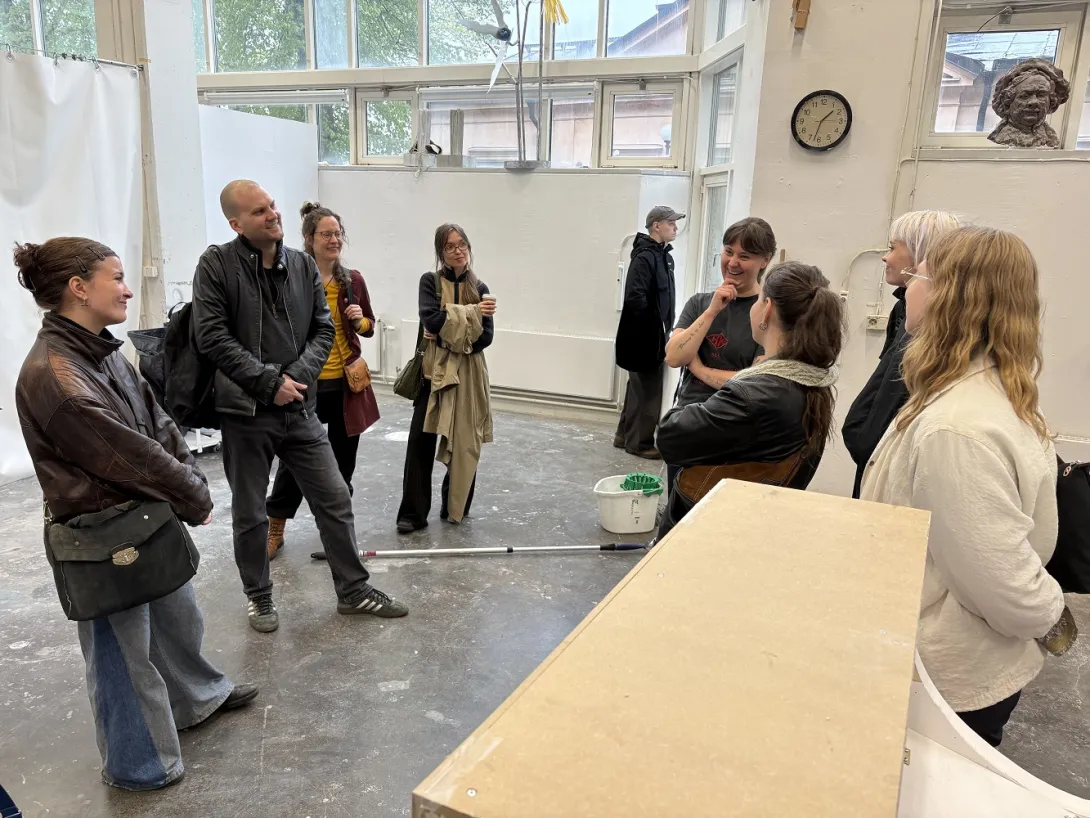
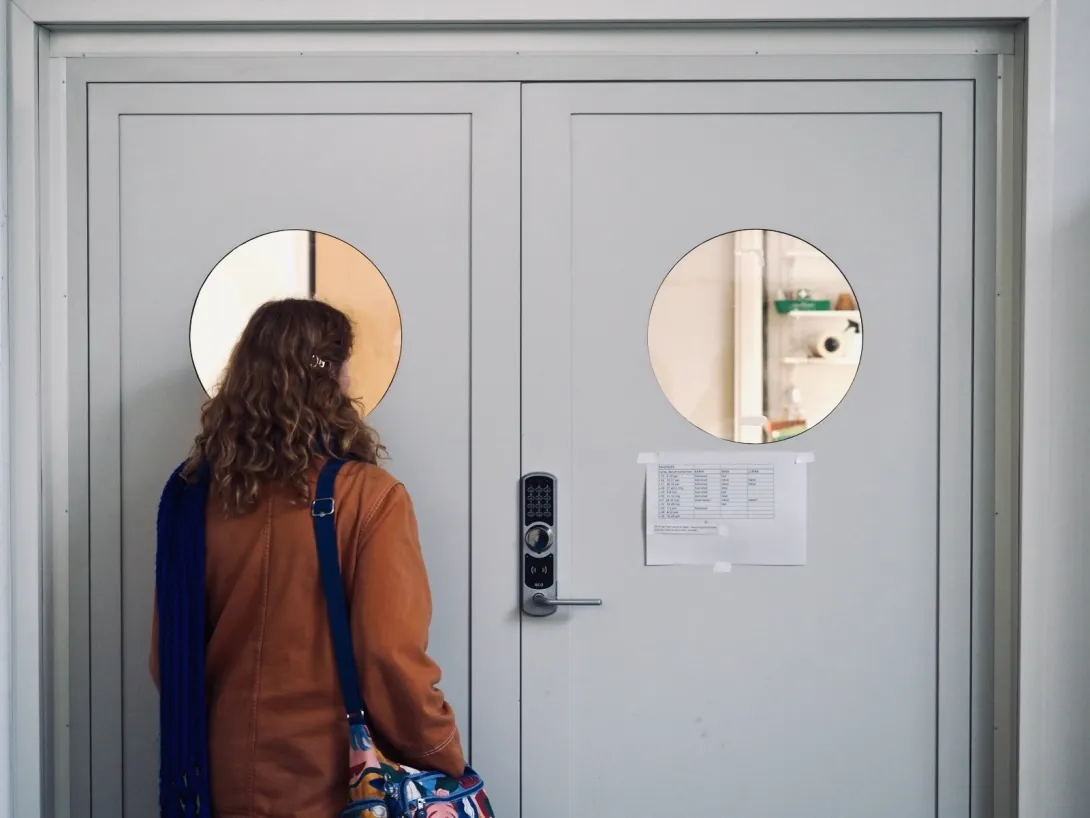
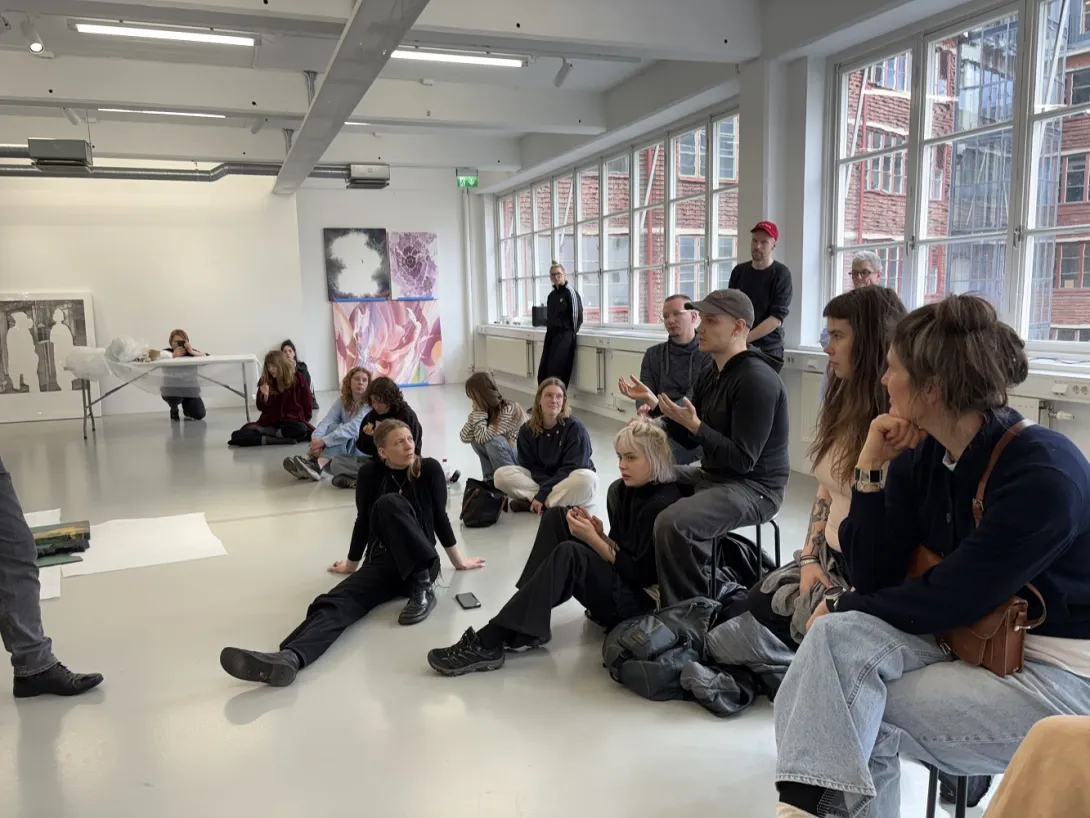
In that sense, our visit to the Royal Institute of Art on Skeppsholmen was a successful component that certainly fulfilled these objectives. We gained a comprehensive insight into how an art school in our neighboring country and fellow Nordic nation operates. We were also able to familiarize ourselves with the school building and its facilities and meet various teachers and students who presented their roles within the institution. The school houses large workshops for wood, metal, and glass, among others, where professional instructors help students realize their artistic visions.
In the woodworking workshop, we met Anette Fellesson, Senior Lecturer in Fine Arts specializing in wood, who said that she believes all ideas can be realized. We hope that sounds like music to your ears as well, Erasmus+!
The visit to the Royal Institute of Art opened our eyes to its high-quality educational programs and the possibilities for future studies. But it also made us appreciate the unique character of our own school.
Just think, Erasmus+, how privileged we at the Free Art School are to be able to focus on and study traditional painting for four whole years! Everything is relative, but as a small comparison, we can mention that at the Free Art School we draw from a live model—croquis—for three hours every week. At the Royal Institute of Art, they happily told us that after a long break they would finally once again be able to offer their students courses with live models.
On Skeppsholmen, we also visited Moderna Museet, which offered several exhibitions. Perhaps the most interesting was “The Underground Sky – Surrealism in Moderna Museet’s Collection.”
The exhibition, with a particular focus on film, literature, and performing arts, presented us painting students from the Free Art School with many surprising, puzzling, and thought-provoking works.
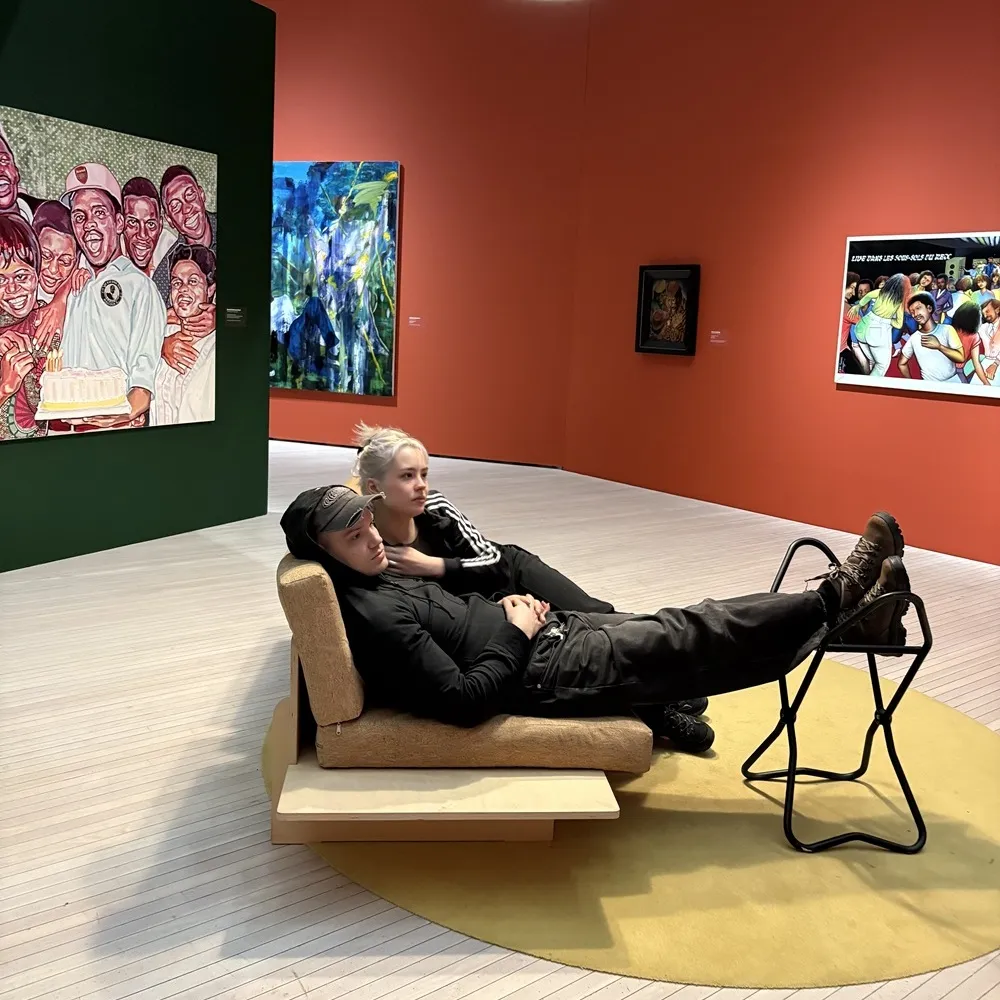
The next island we explored was Djurgården and Stockholm’s largest and oldest art gallery, Liljevalchs. There we saw the exhibition “When We See Us – A Century of Black Figurative Painting,” which featured works by Black artists created over the course of one hundred years.
Built around a joyful perspective, the exhibition was organized into six themes: Everyday Life, Joy and Celebration, Rest, Sensuality, Spirituality, and Triumph and Liberation. The overall experience was impressive and powerful, vibrant and alive—full of beauty, pride, and joy. It was undoubtedly one of the highlights of the trip.
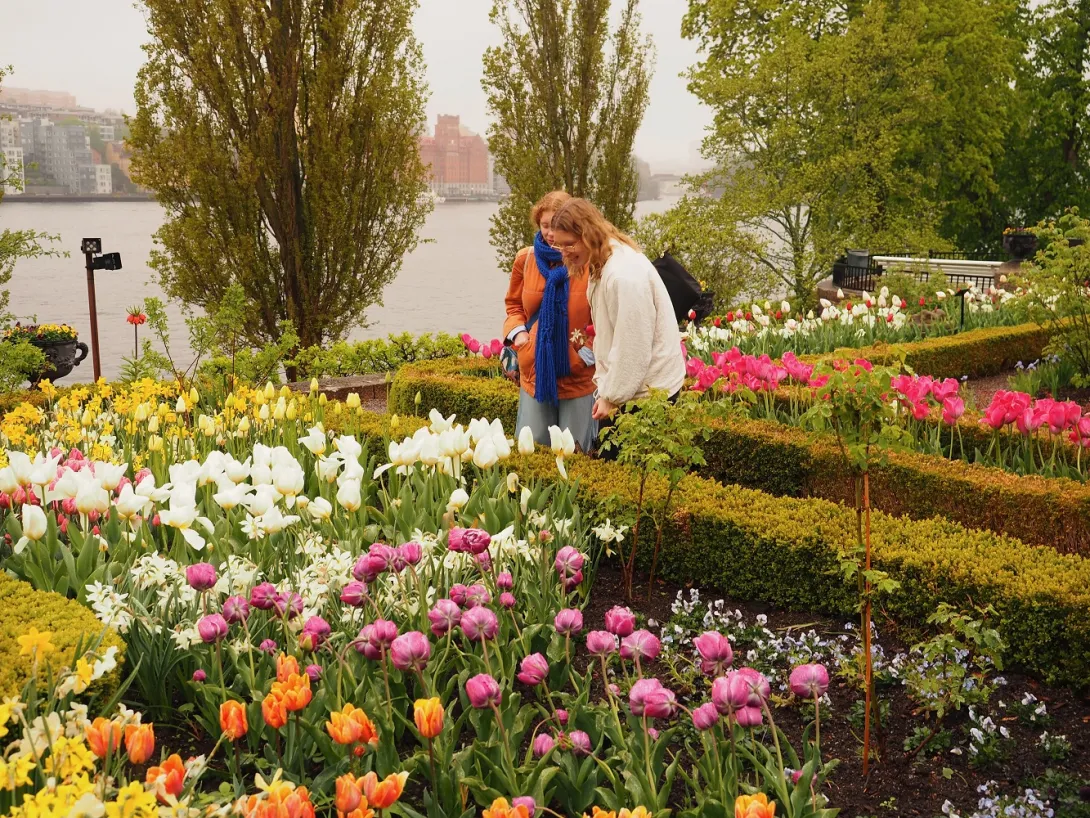
We all enjoyed lunch together at the cozy garden café of Rosendals Trädgård. Tulips bloomed in abundance there, and the ancient oak trees spoke to our artistic souls. With full stomachs and high spirits, we continued our walk to Prince Eugen’s Waldemarsudde, passing oaks as large as castles, some with hollow trunks that one could step into as if entering a royal hall.
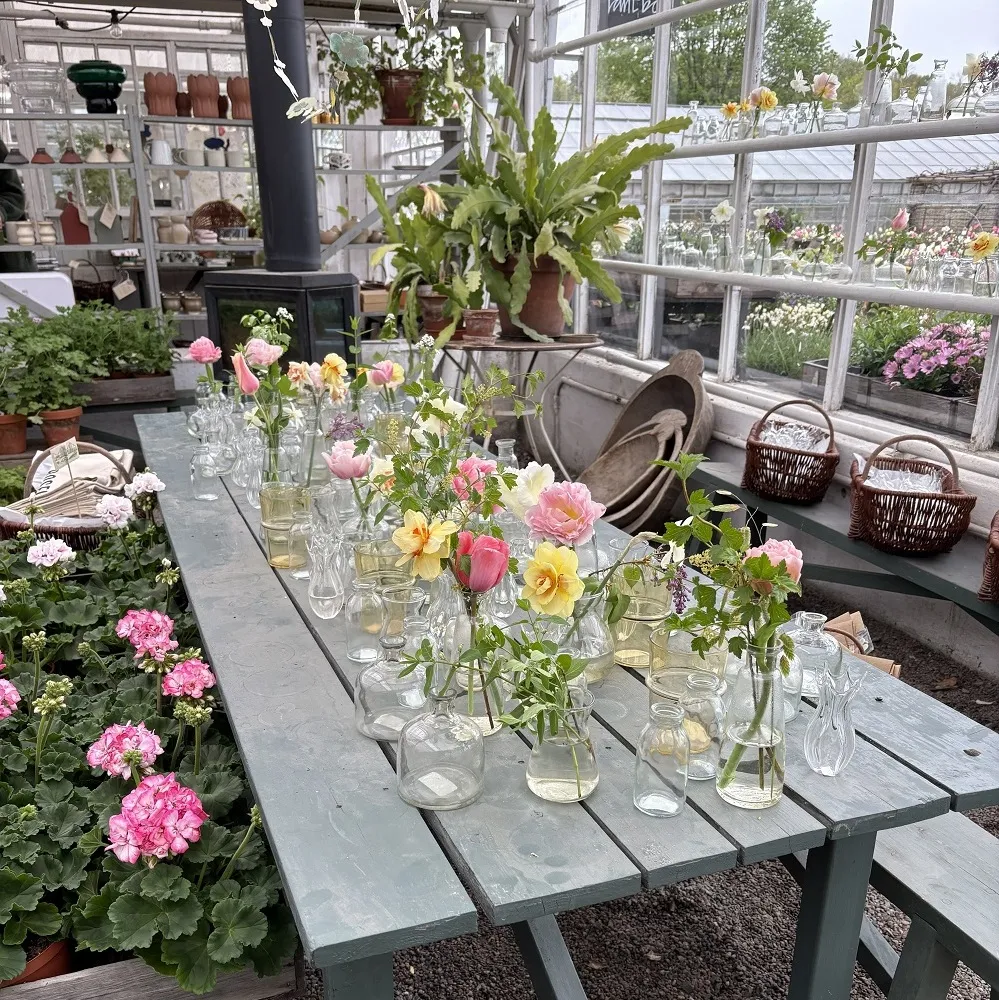
Flowers were blooming everywhere, and the fragrance was heavenly. One student enthusiastically exclaimed:
“You simply can’t help being happy among flowers!”
The floral theme continued at Waldemarsudde, which is surrounded by a magnificent garden and sculpture park. The art gallery hosted the exhibition “The Flowering – Art & Botany,” a tribute to the beauty, symbolism, and role of flowers in our artistic and cultural history—from the sixteenth century to the present day.
In the museum’s manor house, the floral theme continued in both the interior design and the artworks on the walls. Beautiful flower arrangements and green plants were everywhere. It is well known that Prince Eugen passionately stated:
“After art, I believe flowers are my greatest joy.”
Dear Erasmus+, we believe Prince Eugen truly hit the nail on the head. Art and beauty bring joy, and so too has this study trip, with all its artistic experiences, brought joy to us.
But the journey was not over yet! One final visit remained—to Galleri Duerr in Vasastan. There, gallery owner Deborah Duerr warmly welcomed us despite being in the middle of preparing the upcoming exhibition “Errare Humanum Est: Painting at the Time of Artificial Intelligence.”
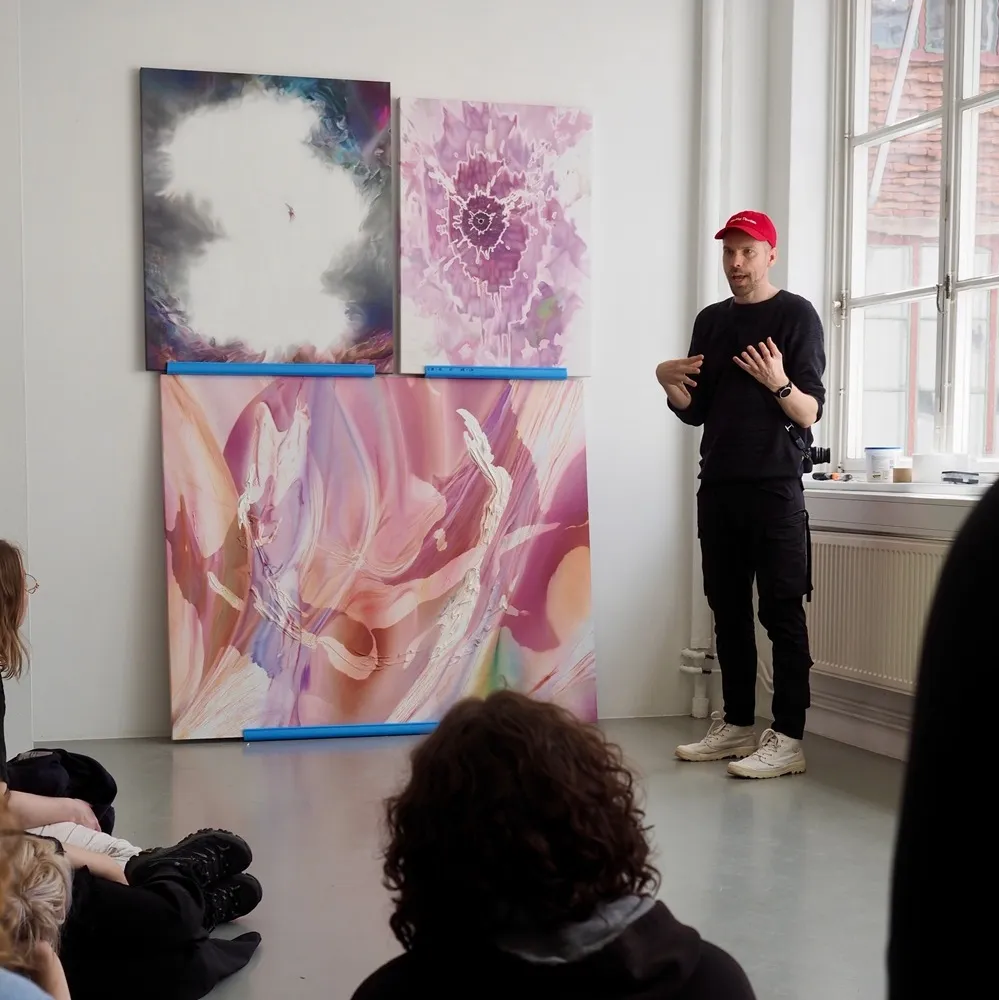
The exhibition’s curator and artists, all of whom had roots in Estonia, were also present. They spoke to us about their works and about how they had used AI during the creative process. The artists had explored with curiosity whether AI could open up new creative possibilities and how it might serve as a tool to support their own creativity.
Now they were eagerly awaiting the opening of the exhibition and wondering how their work would be received.
The exhibition’s theme was fascinating but also evoked mixed feelings, as is often the case when standing at the edge of something new and unknown.
Curiosity, however, is one of humanity’s greatest qualities and driving forces. Thanks to it, we constantly seek new ways to develop ourselves further. Only the future can tell whether AI in art is merely a passing trend or something that is here to stay.
Fortunately, we can always challenge trends and return to the thousands-of-years-old tradition of painting. It is, and always will be, just as alive and relevant.
Dear Erasmus+, we would like to thank you for Stockholm and for making this study trip possible! It has been an inspiring, memorable, and enriching experience that has opened our eyes to the possibilities of international exchange and cooperation.
With many heartfelt greetings,
The Second-Year Students of Fria Konstskolan in Helsinki
P.S. Dear Erasmus+, could you kindly pass on our warmest greetings to our mutual acquaintances, the Free Art School’s Administrative Director Meri Karppanen and Principal Elina Merenmies. We would like to thank them. They have contributed significantly to making this learning period possible.

Funded by the European Union. Neither the European Union nor the European Education and Culture Executive Agency (EACEA) is responsible for the content of this publication.